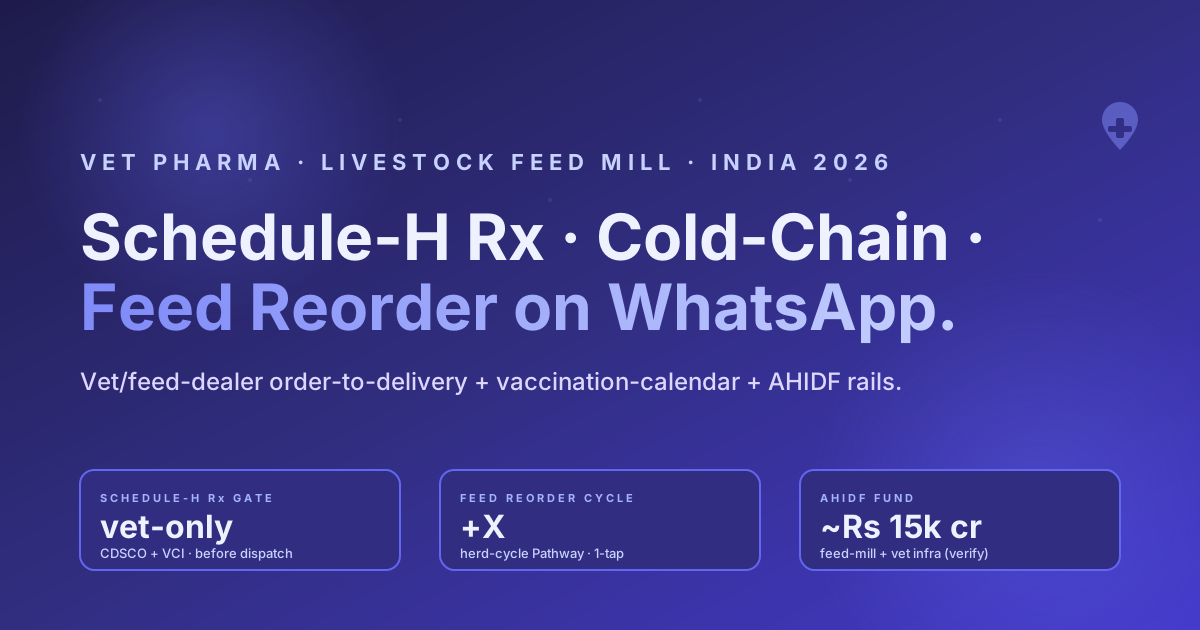
India runs the world's largest livestock economy — roughly 53 crore+ bovines, sheep, goats and pigs plus a poultry sector that moves billions of birds a year — and behind every healthy herd sits a quiet B2B supply chain: the veterinary-pharma stockist who carries Schedule-H animal drugs and cold-chain vaccines, and the cattle/poultry feed mill that ships balanced ration by the tonne. This guide is the 2026 implementation playbook for that order-to-delivery node — the vet-pharma distributor and feed-mill talking to vets, para-vets, feed dealers and large progressive farms — and it is deliberately distinct from the consumer pet-care teleconsult problem and from the dairy cooperative's milk-collection problem. It maps an 8-stage WhatsApp lifecycle a real distributor or mill lives: dealer/vet onboarding with licence + GST capture, an order intake that gates Schedule-H veterinary drugs behind a valid veterinary prescription, cold-chain vaccine handling with temperature attestation, e-Way Bill dispatch, photo proof-of-delivery, a vaccination-and-deworming calendar broadcast, herd-cycle feed reorder, and recall/quality handling for a spurious or out-of-spec batch. It is built around the regulators this node answers to — the Drugs & Cosmetics Act 1940 + Rules 1945 (Schedule H veterinary drugs), CDSCO, the Veterinary Council of India / state councils over who may prescribe, FSSAI and BIS feed-grade standards over animal feed, and the DPDP Act 2023 over farmer and dealer PII — plus the freshest commercial hook, the Animal Husbandry Infrastructure Development Fund (AHIDF, a multi-thousand-crore corpus, ~Rs 15,000 cr directionally — verify the current sanctioned figure) channelling capital into exactly the feed-mill and vet-infrastructure layer this blog serves. Directionally, a single distributor with a ~600-dealer book can compress its order cycle, lift on-time cold-chain compliance, and push herd-cycle feed reorder materially higher — all illustrative, all explained below. Real RichAutomate pricing only: Rs 0 platform fee, Client Pay Rs 0.10/message, SaaS Pay Rs 1.50 marketing / Rs 0.50 utility-auth, 14-day trial + 100 credits.
Why the Vet-Pharma + Feed-Mill Node Is a Different Problem
It is easy to file everything animal-related under one heading, but the B2B vet-pharma stockist and the feed mill are genuinely separate nodes from the three adjacent ones people confuse them with:
- Not the consumer pet-care teleconsult. A pet-care app books a vet video call for a city dog owner and reorders premium kibble. This guide is upstream B2B: a stockist moving Schedule-H injectables and a mill shipping balanced ration by the tonne to dealers and farms — a wholesale, prescription-gated, cold-chain problem, not a D2C pet-parent one.
- Not the dairy/livestock cooperative. A milk cooperative runs collection, fat-testing and farmer payouts on the SELL side of milk. This node is the BUY side of inputs going into the animal — vet drugs and feed — governed by the Drugs & Cosmetics Act and FSSAI/BIS feed standards, not by milk-procurement rules. Downstream, the depots that resell that feed run their own reorder engine in our cattle & poultry feed-dealer lifecycle playbook.
- Not the human-pharma distributor. A human-pharma C&F or stockist runs its own Schedule-H + cold-chain discipline, but the prescribing authority, the drug schedules, the withdrawal-period liability (residues in milk, meat, eggs) and the feed-grade overlay are different. Veterinary practice and food-safety residue rules make this its own compliance surface.
That distributor-and-mill counter is where wrong-drug-without-prescription liability, broken-cold-chain vaccine spoilage, withdrawal-period residue disputes, and out-of-spec feed complaints are born — and where WhatsApp, used correctly within the law, is the single highest-leverage tool this B2B base has mostly never been handed.
FY26 Market Sizing (Directional — Hedge the Exact Numbers)
| Segment | FY26 directional size | Regulator / standard | WhatsApp leverage |
|---|---|---|---|
| Veterinary pharma / animal-health market | ~Rs 12,000 cr+ (estimated, domestic) | Drugs & Cosmetics Act + CDSCO + VCI prescribing | Schedule-H Rx gating + cold-chain attestation are the killer use-cases |
| Compound / mixed cattle + poultry feed | ~Rs 90,000 cr-Rs 1 lakh cr+ (estimated, organised + unorganised blur) | FSSAI feed + BIS feed-grade IS standards | Herd-cycle reorder + ration-spec advisory |
| AHIDF infrastructure corpus | ~Rs 15,000 cr fund (directional — verify sanctioned figure) | Dept of Animal Husbandry & Dairying | Feed-mill + vet-infra capex = a wave of new digitising buyers |
| Field channel (vets, para-vets, feed dealers) | Several lakh prescribing + retail points (estimated) | State veterinary councils + agri-dept licensing | Each is a recurring 200-2,000 farm relationship book |
Treat every figure above as directional. Animal-health and feed market estimates vary widely by source and by how you split organised versus unorganised tonnage; the AHIDF corpus and disbursement change with each extension. Cite ranges, hedge with "estimated," and link the reader to the Department of Animal Husbandry & Dairying and CDSCO for the authoritative current numbers.
The Regulator Landscape This Node Actually Answers To
Five overlapping regulators and standards shape what a vet-pharma distributor and a feed mill may legally do over WhatsApp. None of the specifics below should be treated as legal advice — confirm each against the current notification.
- Drugs & Cosmetics Act 1940 + Rules 1945 (Schedule H, veterinary). Schedule-H veterinary drugs may be sold only against a prescription from a registered veterinary practitioner, and records must be retained. The order flow must therefore gate these SKUs behind a valid Rx — verify the exact schedule classification and retention period for each product against CDSCO.
- CDSCO + state drug controllers. Licensing, batch quality, recall enforcement and antimicrobial-stewardship pressure (responsible-use of veterinary antimicrobials is a rising 2026 theme) sit here. Antibiotic and growth-promoter rules tighten regularly — verify current restrictions.
- Veterinary Council of India + state councils. Define who is a registered veterinary practitioner and may issue a prescription. A para-vet or feed dealer is not automatically a prescriber — the Rx-gate must reference a registered vet, not just any contact.
- FSSAI + BIS feed-grade standards. Animal feed safety, labelling and feed-grade specifications (BIS IS standards for cattle/poultry feed) govern the mill side — including aflatoxin and contaminant limits and accurate nutritional declaration. Verify the applicable IS number and limits per feed type.
- DPDP Act 2023. Farmer and dealer phone numbers, farm locations and herd data are personal data; consent, purpose-limitation and the marketing-versus-utility line all apply. Order confirmations and recall notices are utility; cross-sell broadcasts need opt-in.
One compliance reality cuts across all five: the withdrawal period. Many veterinary drugs carry a mandatory withdrawal window before milk, meat or eggs from the treated animal may enter the food chain. Communicating that window clearly is both a food-safety duty and a litigation shield — and WhatsApp is an ideal channel to attach it to the dispatch of every Schedule-H item. Always reference the product label and the prescribing vet; never invent a withdrawal figure.
The customer LTV calculator turns repeat rate and margin into a per-customer number you can budget against.
The 8-Stage WhatsApp Order-to-Delivery Lifecycle
Here is the lifecycle a real vet-pharma distributor or feed mill lives, stage by stage, with the automation surface and the guardrail at each step.
Stage 1 — Dealer / vet onboarding (licence + GST capture)
A new feed dealer, vet clinic or progressive farm sends "hi" or scans a click-to-WhatsApp QR on the salesman's visiting card. A Flow captures business name, GSTIN, drug-licence number (where applicable), the registered veterinarian's council number for any Rx-gated buying, delivery PIN code and herd/flock size. The record is created clean and consented from message one — no more illegible paper onboarding forms.
Stage 2 — Order intake with Schedule-H prescription gate
The dealer browses a catalog of feed SKUs, supplements and animal-health products. The instant an order line touches a Schedule-H veterinary drug, the flow forks: it requires a prescription reference from a registered vet (council number + a photo of the Rx or an e-prescription) before the line can be confirmed. Feed and non-prescription supplements flow straight through; regulated drugs cannot be dispatched without the gate cleared. This is the single most important guardrail in the whole pipeline.
Stage 3 — Cold-chain vaccine handling + temperature attestation
Vaccine and biological orders trigger a cold-chain sub-flow: pack-out temperature is logged, an ice-pack/cold-box confirmation is attached, and the recipient is asked to attest receipt temperature on delivery. A broken-cold-chain flag routes to a human desk before the dose is administered. The thread becomes the audit trail that a spoiled-vaccine dispute would otherwise lack.
Stage 4 — e-Way Bill + dispatch with ETA
On confirmation, the order generates its tax documents — the e-invoice and, above the threshold, the e-Way Bill (verify the current e-Way Bill value threshold and e-invoice/IRN turnover threshold against the GST portal). The dealer gets a dispatch message with the e-Way Bill reference, vehicle and an ETA, so "where is my consignment" calls collapse.
Stage 5 — Photo proof-of-delivery
The delivery person captures a photo proof-of-delivery and, for vaccines, the receipt-temperature attestation, against the order ID. POD lands in the same thread the dealer already trusts — closing the loop and protecting both sides in a shortage or damage claim.
Stage 6 — Vaccination + deworming calendar broadcast
This is the recurring-revenue engine. A consented, utility-framed calendar pushes the right reminder at the right herd milestone — FMD and brucellosis windows for cattle, the poultry vaccination schedule by bird age, periodic deworming — each with a one-tap reorder of the exact product. Always anchor schedules to the vet's advice and the product label, never to a generic invented date.
Get the India 2026 WhatsApp BSP price comparison
Wati vs AiSensy vs Interakt vs RichAutomate: Meta rates, platform fees and hidden costs, side by side. We send it to your WhatsApp in a minute.
Stage 7 — Herd-cycle feed reorder
Feed consumption is predictable from herd/flock size and growth stage. A Pathway projects the next reorder date and nudges a one-tap repeat a few days before the dealer runs dry — lifting reorder rate and protecting the mill's revenue line while genuinely helping the dealer avoid a stock-out.
Stage 8 — Recall + quality handling
If a batch is recalled or flagged out-of-spec (a contaminated feed lot, a quality-failed drug batch), a targeted broadcast reaches exactly the dealers who received that batch number, with return/replacement instructions — turning a regulatory nightmare into a controlled, documented action.
WhatsApp vs Phone, Email and Distributor Portal
| Dimension | Phone / WhatsApp-personal | Email / distributor portal | WhatsApp Business API (RichAutomate) |
|---|---|---|---|
| Schedule-H Rx capture | Verbal, unrecorded, unauditable | Rarely used by field dealers | Structured Flow + Rx photo/reference attached to order, retained |
| Cold-chain attestation | None | None | Pack + receipt temperature logged in-thread as audit trail |
| Reorder friction | Dealer must call, salesman must be free | Portal login most dealers never do | One-tap herd-cycle nudge in the app the dealer lives in |
| Recall reach | Manual call-around, slow, incomplete | Low open rate | Targeted broadcast to exact batch recipients, documented |
| Compliance evidence | None | Fragmented | Consent + Rx + POD + temperature in one timestamped thread |
The Compliance Layer — What Goes Where
| Communication | Category | Guardrail |
|---|---|---|
| Order confirmation, dispatch, e-Way Bill, POD | Utility | Transactional — tied to a specific order |
| Schedule-H drug dispatch | Utility | Only after valid vet Rx gate cleared; attach withdrawal-period note from label |
| Cold-chain / recall notice | Utility | Safety-critical; targeted to affected recipients only |
| Vaccination / deworming calendar | Utility (reminder) — keep opt-in clean | Anchor to vet advice + label; one-tap reorder, no over-claiming |
| Scheme / cross-sell / new-product push | Marketing | Requires explicit opt-in under DPDP; honour opt-out |
Two lines to never cross. First: a Schedule-H veterinary drug must not be dispatched without the prescription gate cleared against a registered veterinarian — verify the exact schedule status of each SKU with CDSCO, and never let a feed-dealer's contact substitute for a prescriber. Second: never invent a withdrawal period, a vaccination date, a feed-grade limit or a regulatory clause — always reference the product label, the prescribing vet, and the current FSSAI/BIS/CDSCO notification. WhatsApp is the delivery channel for compliant information, not a substitute for the label or the vet.
Per-Stage Automation, KPI and Guardrail
| Stage | Automation surface | KPI to watch | Compliance guardrail |
|---|---|---|---|
| Onboarding | Licence + GST + vet-council Flow | Onboarding completion % | Consent captured; PII purpose-limited |
| Order + Rx gate | Catalog + Schedule-H fork | % Rx-gated lines with valid Rx | No dispatch without prescription |
| Cold chain | Temperature attestation sub-flow | Cold-chain attestation rate | Broken-chain flag to human desk |
| Dispatch | e-invoice + e-Way Bill + ETA | "Where is it" call deflection | Verify GST thresholds current |
| POD | Photo POD against order ID | POD capture rate | Dispute-proof evidence |
| Vacc/deworm calendar | Herd-milestone reminder Pathway | Calendar open + reorder rate | Anchor to vet + label; opt-in clean |
| Feed reorder | Herd-cycle one-tap nudge | Reorder rate / DSO | Utility framing; honour opt-out |
| Recall | Batch-targeted broadcast | Recall reach + return rate | Targeted, documented, fast |
Illustrative Distributor Cohort (Marked Illustrative)
The numbers below are illustrative and estimated — a directional model of what a single vet-pharma-plus-feed distributor with a ~600-dealer book might see after a full rollout. They are not a guarantee; the deltas are intentionally left as "+X" where the realistic gain depends entirely on the distributor's starting discipline.
| Metric | Before (typical) | After (illustrative) | Delta |
|---|---|---|---|
| Order cycle (place to dispatch) | multi-day, phone-led | same/next-day, in-thread | -X |
| Schedule-H lines with valid Rx on file | patchy, paper | near-total, attached | +X |
| Cold-chain attestation rate | ~none | high, logged | +X |
| Herd-cycle feed reorder rate | reactive call-in | one-tap nudged | +X |
| Recall reach to affected batch | slow, partial | targeted, fast | +X |
| Days sales outstanding (DSO) | extended | tightened | -X |
The reorder + recall flywheel. The two stages that pay for the whole system are the herd-cycle feed reorder (Stage 7) and the recall handling (Stage 8). Reorder converts predictable consumption into one-tap revenue the mill would otherwise lose to a competitor or a stock-out; recall converts a regulatory and reputational disaster into a fast, documented, batch-targeted action. Both run on the same consented contact graph you built at onboarding — which is exactly why the Rx gate and the consent capture at the top of the funnel are not bureaucracy, they are the asset that makes the bottom of the funnel work.
Six Anti-Patterns That Wreck This Build
- Dispatching Schedule-H drugs without the Rx gate. The single biggest legal exposure. Build the prescription fork as a hard block, not a soft reminder, and reference a registered veterinarian — not just any saved contact.
- Treating a vaccine like a parcel. Skipping cold-chain attestation means a spoiled-dose dispute has no evidence and a real animal-health risk goes undetected. Log pack and receipt temperature every time.
- Inventing withdrawal periods or vaccination dates. Never auto-fill a residue window or a schedule date from memory. Anchor to the product label and the prescribing vet; mark anything uncertain "verify."
- Marketing-framing a recall. A recall is a safety utility message to affected recipients only — not a broadcast blast and never bundled with cross-sell. Keep it surgical and documented.
- Blasting cross-sell without opt-in. Scheme and new-product pushes are marketing under DPDP and need explicit consent. Riding them on utility threads risks quality strikes and a compliance flag.
- One generic catalog for vets, dealers and farms. A registered vet, a feed dealer and a progressive farm have different buying rights and needs. Segment the catalog and the Rx-gate behaviour by the role captured at onboarding.
12-Week Rollout Path
- Week 1-2: Map SKUs to schedules — flag every Schedule-H veterinary drug, every cold-chain biological, and every feed-grade product; confirm classifications with CDSCO and your drug controller. Inventory current onboarding and order paperwork.
- Week 3-4: Build onboarding Flow (licence + GST + vet-council + PIN + herd size) with DPDP consent capture and role segmentation (vet / dealer / farm).
- Week 5-6: Build order intake with the Schedule-H prescription fork as a hard gate; wire e-invoice + e-Way Bill references (verify current thresholds).
- Week 7-8: Add cold-chain attestation sub-flow + photo POD; route broken-chain flags to a human desk.
- Week 9-10: Stand up the vaccination/deworming calendar and herd-cycle feed-reorder Pathways, each with one-tap reorder; anchor every schedule to vet advice + label.
- Week 11-12: Build the batch-targeted recall broadcast, the compliance evidence export (consent + Rx + POD + temperature), and a weekly KPI review with the sales + quality teams.
Where RichAutomate Fits
The whole pipeline runs on RichAutomate's AI Pathway + Flow builder + template engine + send scheduler: the onboarding Flow, the Schedule-H prescription fork, the cold-chain attestation sub-flow, the e-Way Bill dispatch message, photo POD capture, the herd-milestone calendar, the one-tap feed reorder, and the batch-targeted recall broadcast — all on consented, segmented contacts with the audit trail in one thread. Pricing is honest and usage-based: Rs 0 platform fee, Rs 0 setup, Client Pay Rs 0.10 per message plus Meta's pass-through, or SaaS Pay at Rs 1.50 marketing / Rs 0.50 utility-auth, with a 14-day trial plus 100 credits to prove the order-to-delivery loop before you commit a rupee.
Ship the vet-pharma + feed-mill order-to-delivery loop on RichAutomate.
8-stage lifecycle on consented contacts: dealer/vet onboarding (licence + GST + vet-council) → order intake with a hard Schedule-H prescription gate → cold-chain vaccine temperature attestation → e-invoice + e-Way Bill dispatch → photo proof-of-delivery → vaccination + deworming calendar → herd-cycle one-tap feed reorder → batch-targeted recall. Built for the regulators this node answers to — Drugs & Cosmetics Act + CDSCO + VCI + FSSAI/BIS feed-grade + DPDP — and the AHIDF capex wave digitising the feed-mill layer. Real pricing: Rs 0 platform fee, Client Pay Rs 0.10/message, SaaS Pay Rs 1.50/Rs 0.50, 14-day trial + 100 credits. WhatsApp 918160311319.
Related reading: the licensed agri-input dealer counter playbook, native WhatsApp payments + UPI checkout, and the best WhatsApp CRM for India. See full pricing.