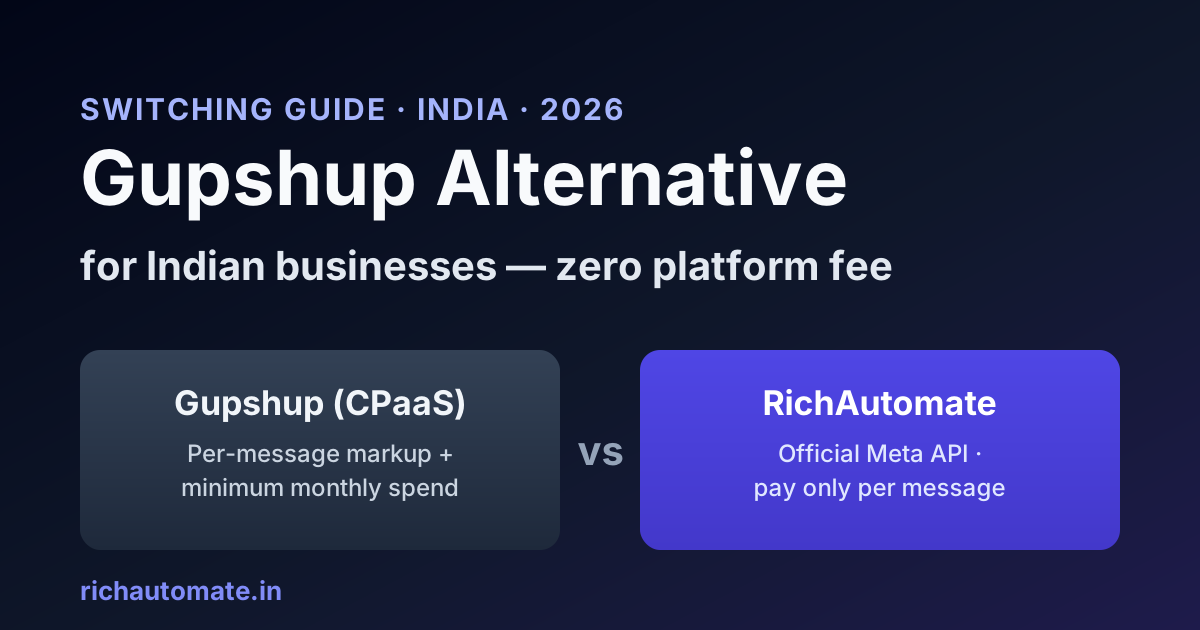
Looking for a Gupshup alternative in India? The short answer: RichAutomate runs on the same official WhatsApp Business API but charges zero platform fee — you pay only per message, with no minimum monthly spend and no per-seat caps. If Gupshup's per-message markup, minimum commitments, or developer-heavy setup are slowing you down, this page shows exactly what changes when you switch, with honest notes on where each tool still fits.
Why businesses look for a Gupshup alternative
Gupshup is a capable CPaaS/omnichannel platform, and for large enterprises running voice, RCS, and multi-channel campaigns it earns its keep. But WhatsApp-first Indian SMBs and D2C brands routinely hit three friction points:
- Per-message platform markup stacked on top of Meta's own conversation charges — so your cost has two layers, not one.
- Minimum monthly commitments that punish low or seasonal volume — you pay for headroom you don't use.
- Developer-oriented onboarding — the API-first setup assumes engineering time that a small marketing or ops team doesn't have.
None of these are dealbreakers at enterprise scale. They just don't fit a team that wants to broadcast, run a chatbot, and answer chats without hiring a developer or signing a floor commitment.
Gupshup vs RichAutomate at a glance
| What matters | Gupshup | RichAutomate |
|---|---|---|
| Underlying API | Official Meta WhatsApp API | Official Meta WhatsApp Cloud API (v24.0) |
| Platform / subscription fee | Per-message platform markup; minimum monthly spend often applies | ₹0 platform fee — no subscription, no minimum |
| How you pay | Markup per message + Meta charges | Per message only: Client-Pay ₹0.10/msg, or SaaS-Pay ₹1.20 marketing / ₹0.30 utility-auth (Meta charges separate) |
| Agent seats | Tiered / capped by plan | No per-seat charge |
| Contact quota | Plan-dependent | No contact quota |
| Setup style | Developer / API-first | No-code onboarding + visual flow builder |
| Best fit | Multi-channel enterprise (voice, RCS, bots at scale) | WhatsApp-first SMBs, D2C, agencies wanting transparent per-message cost |
For a line-by-line rupee breakdown of the two models, see our Gupshup vs RichAutomate pricing decoded analysis.
The pricing math, decoded
The difference isn't a discount — it's a different structure. Gupshup adds a platform markup on every message and typically expects a minimum monthly spend. RichAutomate removes the platform layer entirely: your bill is Meta's conversation charge plus a flat, published per-message fee, and nothing when you send nothing.
A worked example at moderate volume — say 50,000 utility notifications a month:
Get a 1-minute BSP audit on WhatsApp
Drop your WhatsApp number — we line-item your current invoice against Meta India rates in under 60 seconds. India-hosted, DPDP-compliant.
- RichAutomate (SaaS-Pay): ₹0.30/msg platform-inclusive = ₹15,000, plus Meta's utility conversation charges. No floor, no seat fees.
- Gupshup: Meta's charges + a per-message platform markup + any minimum-spend commitment. Pull your current Gupshup rate card and compare the markup line directly — that gap is what you save.
Because RichAutomate has no minimum, the savings widen for seasonal or low-volume senders who otherwise pay for unused commitment. If your goal is the lowest all-in cost, our Karix vs RichAutomate comparison and Wati vs RichAutomate breakdown apply the same method to two other popular providers. Full published rates live on the RichAutomate pricing page.
What you keep when you switch
Switching a BSP does not change your WhatsApp number, your green-tick status, or your official API access — you keep all of it. Both Gupshup and RichAutomate are built on Meta's official API, so a migration is a hosting change, not a rebuild. With RichAutomate you also get, at no extra platform cost:
- Bulk broadcasts on approved templates, one-click or scheduled.
- A no-code visual flow builder for chatbots and auto-replies.
- Shared team inbox with unlimited agents.
- Razorpay-based wallet billing — top up, pay per message, watch every debit.
Migration in three steps
- 1. Connect your number. Move your WhatsApp Business number to RichAutomate's WABA (a standard Meta migration — no downtime, number and history preserved).
- 2. Re-import templates. Your approved message templates carry over; re-submit any that need it.
- 3. Point your automation. Rebuild flows in the visual builder or repoint your API calls to the RichAutomate endpoint.
Note: going live on the official API requires business verification, and a valid GST registration is effectively required to move a number to production in India — keep it handy before you start.
Who should switch — and who shouldn't
Switch if you're WhatsApp-first, want a transparent per-message bill with no floor, and prefer no-code setup over engineering time. Stay on Gupshup if you genuinely need its wider CPaaS stack — voice, RCS, or omnichannel bots at enterprise scale — because that breadth is what you'd be paying the platform fee for. We won't pretend a lighter tool replaces a platform you actually use end-to-end.
One thing no honest BSP will promise: sending to cold or purchased numbers without opt-in. WhatsApp bans that regardless of provider. RichAutomate ramps volume as your quality tier rises — it does not "guarantee no ban."
Ready to compare on your real numbers?
Bring one month of your Gupshup invoice and we'll map it line-for-line to RichAutomate's per-message model — no minimum, no platform fee, no lock-in. Start on the pricing page or book a 15-minute walkthrough.