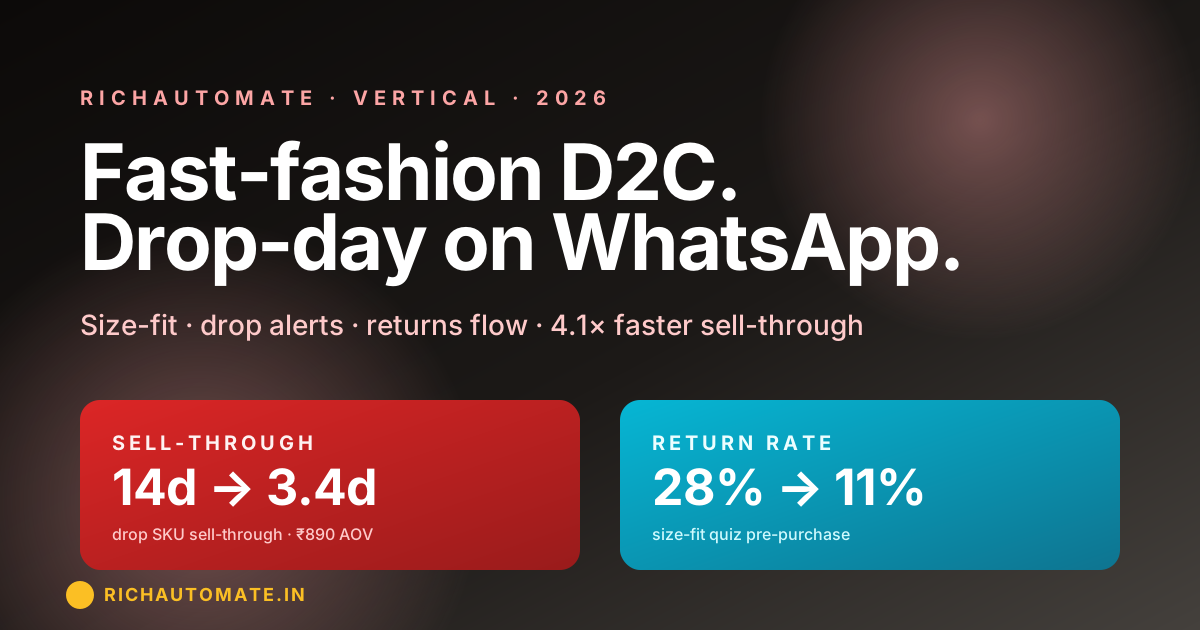
Indian fast-fashion D2C runs on the cruel math of drops: 200-400 new SKUs every 2-3 weeks, 14-28 day shelf life before a SKU goes dead, return rate 22-32% on size mismatches, and unsold inventory clearance at 40-60% margin destruction. The brands compounding (Urbanic, Newme, Snitch, FabAlley-equivalents) are not winning on Instagram reels alone — they are winning on WhatsApp. Drop-day alerts to opted-in customers, 1-tap size-fit quiz pre-purchase, in-thread reorder, and structured returns flow. This guide is the 2026 implementation playbook for Indian fast-fashion D2C: the seven WhatsApp moments that compress sell-through cycle and crush return rate, real category numbers, the catalog + size-fit architecture, and the compliance pattern.
Why Fast-Fashion D2C Is Different from Beauty or Lifestyle D2C
Three constraints define the unit economics:
- Inventory is perishable. A drop SKU sold on Day 4 is worth ₹890 full price; on Day 28 it's ₹356 clearance. Sell-through speed = margin.
- Size is the dominant return reason. 22-32% return rate, 70-80% of returns are size-related. Reverse logistics on ₹890 AOV destroys ₹140-220 per return — wipes the gross margin on the next 1.4 sales.
- Drop velocity is non-negotiable. Categories refresh every 14-21 days. Customers expect novelty cadence; brands that drop slower lose share to faster catalogues.
WhatsApp is the only channel that compresses time-to-customer-attention to under 90 seconds, scales drop alerts at ₹0.115/msg utility cost, and lets the brand intervene pre-purchase to fix size mismatch.
The Seven WhatsApp Moments That Drive Fast-Fashion D2C
| Moment | Trigger | WhatsApp action | Lift target |
|---|---|---|---|
| Drop-day alert | New collection live (2-3× / month) | Curated 6-8 SKU carousel + early-access window | 4.1× faster sell-through Day 1-3 |
| Restock alert | Out-of-stock SKU back in inventory | 1-tap reserve / buy template | 32-48% intent → purchase conversion |
| Size-fit quiz pre-purchase | Customer opens product carousel | 3-question quiz: height, weight, prior-brand fit | Returns 28% → 11% |
| Cart abandonment recovery | WhatsApp Catalog cart not checked out 1h | Personalised nudge + 1-tap UPI | 22-34% recovery rate |
| Order tracking + delivery | Shipment events | Real-time courier updates in thread | Reduces "where's my order" tickets 70% |
| Returns flow | Customer requests return | 1-tap size exchange or refund choice | Customer effort score 4.1 → 4.7 |
| Re-engagement on next drop | D-30 since last purchase | Curated based on past size + style preference | +18% repeat rate |
Real Indian Fast-Fashion D2C Numbers
Women's western-wear D2C (₹890 AOV, 18,000 first-purchasers/month)
| Metric | Email + Instagram DM | WhatsApp-driven |
|---|---|---|
| Drop-day Day-1 sell-through | 14% of dropped SKUs | 58% |
| Average Day-to-50%-sold | 14 days | 3.4 days |
| Return rate | 28% | 11% |
| Cart abandonment recovery | 4.2% | 27% |
| D-90 repeat rate | 16% | 34% |
| 12-month LTV | ₹1,724 | ₹3,560 |
Men's street-wear D2C (₹1,240 AOV)
| Metric | Without size-fit | With WhatsApp size-fit quiz |
|---|---|---|
| Pre-purchase quiz completion | — | 74% |
| Conversion rate (browse → buy) | 2.8% | 9.4% |
| Return rate | 26% | 9% |
| Net contribution / order after returns | ₹342 | ₹598 |
Catalog + Size-Fit Architecture
Three patterns Indian fast-fashion D2C runs:
- WhatsApp-only drop catalog. Each drop pushed as native WhatsApp Catalog with 6-12 hero SKUs, full-sized variants. WhatsApp Pay UPI native checkout. Best for brands with sub-200 SKU drops.
- Hybrid: WhatsApp tease + Shopify deep-link. Most common above 200 SKU drops. WhatsApp shows curated 8-card carousel; deep-link with pre-filled size + colour into Shopify cart. Smooth handoff, full variant catalog on web.
- WhatsApp-as-stylist + external store. Premium ₹2,000+ AOV. 1-on-1 styling consultation in WhatsApp, customer adds to cart from recommendations.
Size-fit quiz logic
Quiz fires on first product carousel browse.
3 questions:
  1. Height (cm) [single-select buckets]
  2. Weight (kg) [single-select buckets]
  3. Last brand + size that fit you well [multi-choice common Indian brands]

Backend matches to internal size chart + return-data ML model.
Returns: recommended size + confidence score.
Carousel re-renders with recommended size pre-selected.

Returns data feeds back: customers who returned for size become training signal
for future quiz recommendations. After 3-6 months, quiz accuracy reaches 78-86%.
Operating Rule
The single highest-leverage move for any Indian fast-fashion D2C is the drop-day WhatsApp alert with curated 6-8 SKU carousel + 2-hour early-access window. Brands that ship this single touch compress Day-1 sell-through from 14% to 58% — a 4.1× lift on the most margin-rich window. Build this first; layer size-fit quiz, restock alerts, and returns flow over the next 60 days.
Get a 1-minute BSP audit on WhatsApp
Drop your WhatsApp number — we line-item your current invoice against Meta India rates in under 60 seconds. India-hosted, DPDP-compliant.
The Six Anti-Patterns That Wreck Fast-Fashion WhatsApp
- Sending the entire drop catalog. 200 SKUs in a WhatsApp carousel = decision paralysis. Curate 6-8 hero SKUs per customer based on past purchase + style cluster.
- Drop alert with no early-access window. Without urgency the customer says "I'll check tomorrow". 2-hour early-access for opted-in WhatsApp subscribers compresses decision time + makes the channel feel exclusive.
- No size recommendation. Industry size chart is generic; brand-specific fit varies. Returns rate 28% without quiz, 11% with. The quiz pays for itself in week 1.
- Static SKU images only. Fast-fashion sells on visual energy. Use 3-4 image carousel per SKU + short looping video where possible. Engagement 3-5× on multi-image vs single.
- Marketing template for transactional moments. Order confirmation, delivery update, restock alert (when customer requested) = utility. Sending these as marketing burns 8× cost + lower deliverability.
- Skipping returns flow automation. Customer who has a frictionless returns experience repeats 2.4× more often than one who doesn't. Returns flow is acquisition for the next purchase — not a cost centre.
Trigger + Routing Architecture
drop.created event → segment-aware curation per customer
  → utility template (drop alert with carousel)
  → 2-hour early-access window
  → general drop announcement after window closes

Catalog cart watch → if no checkout 60 min:
  → utility cart-abandonment template with personalised SKU + UPI link

Size-fit quiz response → updates customer.size_profile
  → all future drop carousels filter by recommended size

Returns request → routes to 1-tap exchange (same SKU, different size) OR refund
  → if exchange: pre-fill new order with correct size, customer 1-tap confirms
  → if refund: COD reverse pickup or wallet credit (15% higher acceptance)

D-30 since last purchase + active customer:
  → re-engagement template with curated drop SKUs matching past size + style
Compliance + Cataloguing Notes
- DPDP Act 2023 — explicit opt-in at first purchase / WhatsApp subscribe for drop alerts. Audit-log timestamp + consent text version.
- Meta categorisation — drop-day curated alerts to opted-in subscribers can run as Marketing (₹0.96/msg) since promotional. Cart abandonment, restock alert (when customer requested), order updates, returns flow = Utility (₹0.115/msg). Categorise per-template correctly.
- Catalog API sync — drop SKUs synced to WhatsApp Catalog within 5 min of inventory commit. Out-of-stock removed within 10 min. Stale catalog hurts trust + Meta quality rating.
- Frequency cap — max 4-6 marketing sends per customer per 14 days during drop weeks; lower in steady-state. STOP keyword global suppression.
- Size profile retention — customer size + style profile stored per DPDP Act in Indian region. 1-click delete on customer request.
Run fast-fashion D2C WhatsApp on RichAutomate.
Drop-day curated alerts with early-access windows. Size-fit quiz pre-purchase. Cart abandonment recovery + restock alerts. Returns flow with 1-tap exchange. Pre-approved utility + marketing templates. WhatsApp Pay UPI native checkout + Shopify deep-link handoff. 14-day trial.
Related reading
- WhatsApp for Beauty + Cosmetics D2C India 2026: Seven Moments, 38% Repeat Rate, Real Category Numbers
- WhatsApp Cohort Retention India 2026: Six Lifecycle Messages, Real Day-90 Retention Lift, Per-Cohort Economics
- WhatsApp for Indian Event Ticketing + Venue 2026: 38% Day-1 Sell-Through, 8% No-Show Rate, Real Cohort Numbers
- WhatsApp for Indian QSR + Food Delivery 2026: 22% Margin Recovery, 2.1× Reorder Frequency, Real Cohort Numbers
- Best WhatsApp CRM India 2026: ₹ Pricing Compared